
Why Beginner Martial Arts Classes Are the Ultimate Antidote to Screen Time and Stress
Every parent and busy adult faces a shared challenge: constant notifications, prolonged sitting, and dwindling opportunities for purposeful physical activity. Searching for beginner martial arts classes is often the first step toward reclaiming physical vitality and mental clarity. Taekwondo and traditional martial arts training offer structured progression, full-body exercise, and character development in a welcoming group setting.
Key Takeaways
- Comprehensive physical fitness: Martial arts training develops cardiovascular endurance, functional mobility, balance, and core strength without the monotony of standard gym routines.
- Enhanced focus and self-regulation: Clear protocols, belt progression systems, and repetitive technical practice train the brain to sustain attention and manage impulsive behaviors.
- Lifelong family value: Unlike drop-off sports where parents remain spectators, family martial arts programs allow parents and children to share the mat and grow together.
The Modern Health Dilemma and Why Traditional Fitness Falls Short
Sedentary screen time among school-aged children and working professionals has climbed to unprecedented highs. Daily physical education in schools continues to shrink, while remote and hybrid work environments keep adults tethered to desks for eight to ten hours every day. The result is a dual crisis of physical deconditioning and heightened nervous system strain.
Standard fitness options often fail to sustain long-term engagement. Treadmills and repetitive weight machines lack the mental stimulation required to keep participants motivated past a few weeks. Team sports, while beneficial, can bring high-pressure competition, seasonal gaps, and rigid travel schedules that complicate family calendars. Beginner martial arts classes bridge this gap by treating physical movement, mental discipline, and emotional balance as parts of one unified practice.
Recent research highlights how martial arts training promotes behavioral regulation and executive functioning. As reported in developmental studies examining youth physical activities, structured martial disciplines like Taekwondo improve emotional control, reduce classroom conduct problems, and build lasting self-worth. Students learn to regulate breathing, listen attentively to multi-step instructions, and remain composed under pressure.
Core Benefits of Stepping onto the Mat
Martial arts training goes beyond kicking and punching. The dojang (training hall) functions as a laboratory for personal growth, where students of all ages systematically develop three core pillars of well-being:
| Training pillar | What you practice on the mat | Everyday life application |
|---|---|---|
| Mental clarity & focus | Forms (Poomsae), reaction drills, breath control | Better school grades, longer attention span, workplace problem-solving |
| Functional strength & agility | Dynamic kicking, balance drills, core conditioning | Injury prevention, improved posture, sustained physical energy |
| Emotional resilience | Overcoming challenging techniques, belt test milestones | Handling setbacks calmly, building healthy self-confidence, stress relief |
1. Restoring attentiveness and cognitive control
From the moment a student bows onto the training floor, external distractions disappear. Students learn to align their eyes, body, and thoughts toward a single target or instruction. This deliberate focus rewires attention spans eroded by short-form digital media. When a child practices a complex combination or an adult refines a precise kick, their working memory and spatial awareness operate at full capacity.
2. Whole-body functional conditioning
Taekwondo provides a comprehensive workout that targets every major muscle group. High-velocity kicks build hip flexibility and leg power; defensive blocks strengthen shoulders and upper back muscles; and continuous movement improves cardiovascular stamina. Because every motion originates from the body’s core, students naturally develop spinal stability and better everyday posture.
3. Confidence built on tangible milestones
Authentic confidence cannot be handed out as a participation ribbon; it must be earned through dedicated effort. The belt ranking system breaks down long-term mastery into achievable, incremental goals. Each stripe and new rank serves as concrete proof that persistence yields results. Students carry that lesson outside the studio: when faced with a difficult school test or professional challenge, they know they have the discipline to persevere.
The Rise of Family Martial Arts Training
A major shift in community wellness is the rising popularity of shared family training. Traditionally, parents spend hours sitting on the sidelines or waiting in parking lots while their children participate in extracurricular activities. Family martial arts classes turn wasted waiting time into shared quality time.
When parents train alongside their children, family dynamics transform in powerful ways:
- Shared challenges and common language: Parents and kids practice the same foundational blocks, kicks, and forms, creating shared conversation topics at the dinner table.
- Leading by example: Children see their parents stepping out of their comfort zones, sweating, accepting constructive feedback, and working hard toward new goals.
- Mutual encouragement: When a child sees a parent struggle with a balance drill and push through, it normalizes effort and demystifies failure.
What to Expect in Your First Class
Stepping into a martial arts center for the first time can feel intimidating, but beginner-friendly studios design introductory sessions to be welcoming, safe, and empowering. You do not need prior experience, high flexibility, or peak athletic conditioning to get started.
- Warm-up and joint mobility (10–15 minutes): Gentle dynamic stretches, light cardio, and joint rotations prepare muscles and increase heart rate safely.
- Foundational technique drills (20–25 minutes): Instructors teach proper stances, basic defensive guards, and controlled linear kicks against padded training shields.
- Application and partner pad work (15–20 minutes): Students practice techniques on focus mitts with an emphasis on rhythm, distance, and precision rather than brute force.
- Cool down and mindset discussion (5–10 minutes): Class concludes with breathing exercises, reflection on a character value such as respect or perseverance, and a formal closing bow.
Finding the Right Program for Your Goals
Every student enters the dojang with a unique set of needs and aspirations. Choosing the right program ensures you receive instruction tailored to your current stage of life:
- Early childhood (ages 4–6, Little Ninjas): Focuses on foundational gross motor skills, following multi-step directions, balance, and spatial awareness in an energetic, play-based format.
- Youth and pre-teens (ages 7–12): Emphasizes bully prevention, practical self-defense, positive peer interactions, academic focus, and self-discipline.
- Teens and adults: Centers on high-energy cardiovascular fitness, stress reduction, practical self-defense tactics, joint mobility, and mental unwinding after demanding workdays.
- Family training cohorts: Provides parallel progression tracks where parents and children train simultaneously in a cooperative, supportive environment.
Why Family Martial Arts Center in Mount Dora Is the Ideal Place to Start
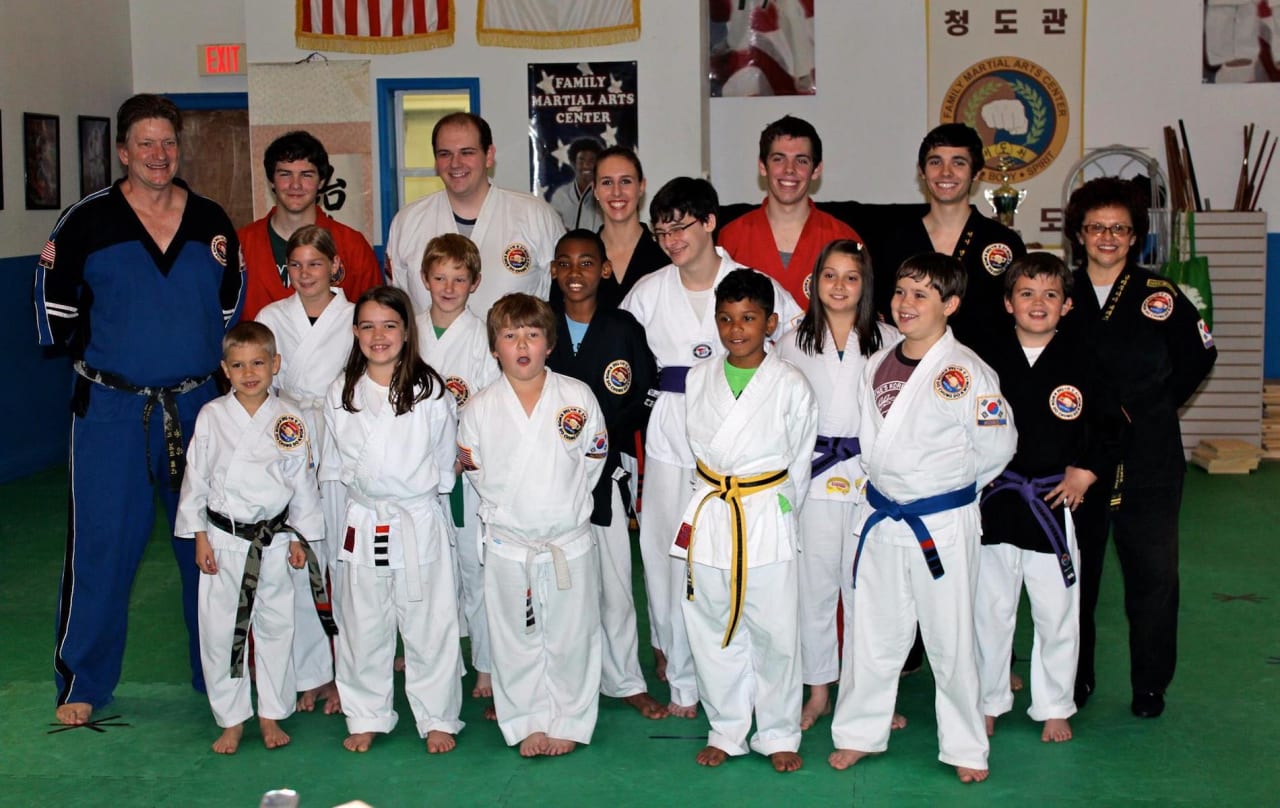
If you are searching for beginner martial arts classes in Mount Dora, FL, Family Martial Arts Center provides a warm, community-centered environment dedicated to empowering students of all ages. Conveniently located at 3755 Lake Center Drive in Mount Dora, FL, our school combines traditional Taekwondo principles with modern, safety-conscious teaching methods.
At Family Martial Arts Center in Mount Dora, FL, our experienced instructors believe that martial arts is for everyone—regardless of current fitness level or athletic background. Whether your goal is helping your child develop self-discipline for school or rediscovering your own strength and energy, our Mount Dora team supports you every step of the journey.
Frequently Asked Questions
Do I need to be in good physical shape before joining beginner martial arts classes?
No. Beginner classes are specifically structured to help you build stamina, strength, and flexibility progressively from your starting point. You set your own pace, and instructors offer modifications for every fitness level.
At what age can children start martial arts training?
Children can start as early as age 4 in specialized introductory programs. These early-childhood classes focus on balance, motor control, focus, and listening skills in a fun, structured environment.
How often should beginner students attend classes each week?
Attending two to three classes per week provides the ideal balance of skill retention, physical conditioning, and adequate muscular recovery between sessions.
Is martial arts training safe for beginners and kids?
Yes. Certified instructors supervise all activities closely, utilizing padded targets, controlled contact rules, and structured safety guidelines to ensure a supportive and injury-free experience.
Take the First Step Toward a Stronger, More Focused Family
Transforming your physical health and sharpening your mental focus starts with a single step onto the mat. At Family Martial Arts Center in Mount Dora, FL, we welcome you to experience how martial arts can empower your mind, body, and spirit. Contact us today at (352) 383-0898 or visit us in Mount Dora to schedule your introductory class and begin your journey!